


By this point in the academic year, planning cycles are largely set. Yet the ground under enrollment marketing continues to shift. Shrinking student pools, rising acquisition costs, and growing ROI skepticism are pushing marketing teams to do more with less and to prove every dollar’s value in real time.
Across the institutions we support, these shifts are forcing teams to balance tighter budgets with higher expectations. We consistently hear that leaders want clarity they can act on without adding new work to their already full plates. This moment is not about making sweeping changes. It is about smart, targeted moves that keep momentum going. Here are three trends that matter most right now and what to do next.
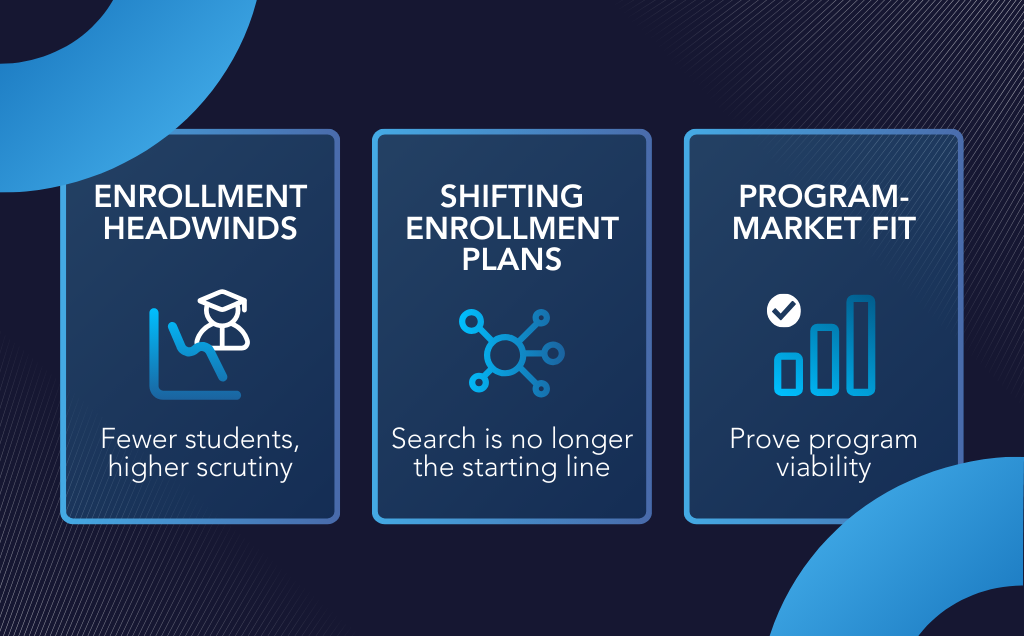
1. Enrollment Headwinds: Demographic Shifts and ROI Skepticism
The enrollment cliff is no longer a forecast. It is reality. Fewer students are entering the pipeline while institutional goals continue to climb. The result is a smaller audience and a higher cost to acquire each student.
In recent campaigns, we have seen that even well-optimized funnels lose efficiency as student pools contract. Institutions tell us they are feeling that shift in very real and measurable ways. The institutions making the most progress are those with clear visibility into which channels drive quality, not just quantity. At the same time, institutional leaders are cautious about marketing budgets. They want clear proof that investments translate into enrollments, not just clicks.
What to do now:
Use the data you already have to tell the right story. Connect last year’s performance to this year’s goals and show the lifetime value of a student, not just cost per lead (CPL). Pair CPL with cost per qualified start (CPQS) or customer acquisition cost (CAC) to demonstrate how each source contributes to real enrollment outcomes.
If you are looking for immediate optimization, start small. Identify one or two underperforming campaigns or media sources and shift a modest portion of your budget toward channels that produced the highest quality inquiries last year. These focused adjustments fit within existing budgets and show leadership that spend is being managed strategically.
Above all, emphasize clarity. Clear reporting reduces second-guessing, which we know is one of the biggest pain points for marketing leaders heading into planning cycles. When you can show exactly where dollars went and what came back, you reinforce confidence that marketing spend is an investment that delivers measurable returns.
2. Traditional Search Is No Longer the Starting Line
Search remains vital, but it is no longer the first stop for students exploring options. Today’s students discover institutions through AI-assisted searches, TikTok feeds, Reddit threads, and peer influencers who provide a real view of campus life. They want to feel an institution before they click on an ad, if they do at all.
The earliest signals of intent now emerge on social channels long before a prospective student reaches a search campaign. We have seen this pattern play out across traditional and nontraditional student audiences alike.
What to do now:
Continue investing in search, but expand into paid social campaigns that mirror the journeys students are already taking. Optimize these campaigns toward milestones such as scheduled interviews, applications, or starts rather than clicks or impressions.
When partnering with vendors, insist on visibility. Ask to see creative assets, placements, and optimization schedules. Find out how frequently campaigns are adjusted based on changing behavior and how compliance is verified. Transparency is more than a best practice. It is the foundation of trust.
Institutions that maintain clear visibility into their media investments and demand real-time adjustments will be best equipped to adapt as student habits evolve regarding search and discovery.
3. Program-Market Fit:Marketing Needs a Program Viability Lens
ROI skepticism often begins with program and curriculum relevance. Students and their families want assurance that their degree will lead to practical outcomes such as job readiness and durable skills.
Teams that integrate market-demand signals with enrollment data help institutional and senior enrollment leaders make faster, evidence-based decisions. We have seen this approach reshape institutional strategies in real time, especially in career and technical programs. It is often the missing link that helps leaders understand why demand is rising or falling.
What to do now:
Add a program viability view to your reporting. Track inquiries, applications, and enrollments by program and compare them to last year’s performance. Where demand is declining, flag it early and collaborate with academic or career services leaders to refine messaging or even adjust program offerings.
Presidents and boards do not just want growth. They want confidence that growth aligns with market need. Marketing leaders who bring data to those conversations earn a stronger strategic voice.
The Bottom Line
External turbulence will not disappear, but clarity is an advantage. The teams we see succeeding are the ones making small, thoughtful adjustments rooted in evidence rather than intuition. By refining metrics, increasing transparency with partners, and staying close to what students want, enrollment marketers can turn small adjustments into meaningful progress.
At Cygnus, we help institutions turn marketing visibility into measurable growth.
When you are ready to work with a partner built on transparency and trust, we are here for you. Let’s connect.